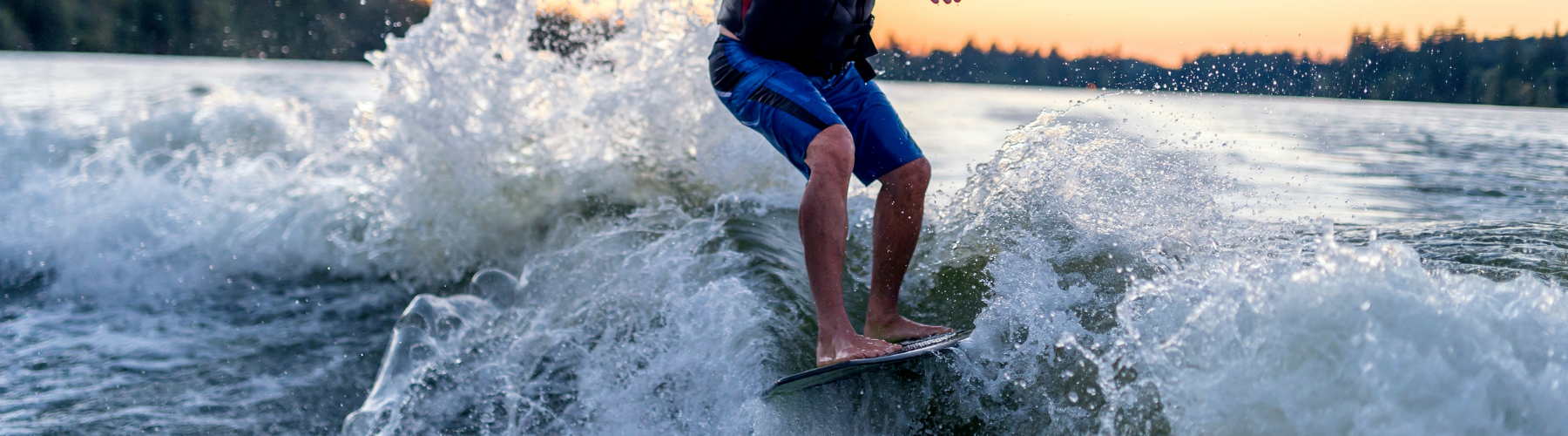
In recent years, there has been growing discussion about the potential impacts of recreational boating on lake health. Particular attention has focused on wakeboard boats—often referred to as wakesurf boats. These vessels typically range from 350 to 650 horsepower, compared to the 150 to 250 horsepower common in traditional runabout-style boats found on Minnesota lakes. Their V-shaped hulls are specifically designed to displace large volumes of water, creating sizable waves that allow individuals to surf behind the boat.
Since 2019, Minnesota Lakes & Rivers Advocates (MLR) has partnered with lake associations, soil and water conservation districts, the Minnesota Department of Natural Resources, boat manufacturers, and marinas to identify strategies that reduce the impacts of enhanced wake activities on lake health.
Our mission is to protect water quality, support local lakeshore communities, improve water safety, and reduce user conflicts through responsible boating. We take a collaborative approach to civic organizing around science, education, and outreach to better understand and share information about wake boating impacts on shorelines, ecosystems, and other lake users—while promoting responsible boating practices that become widely adopted across the community.
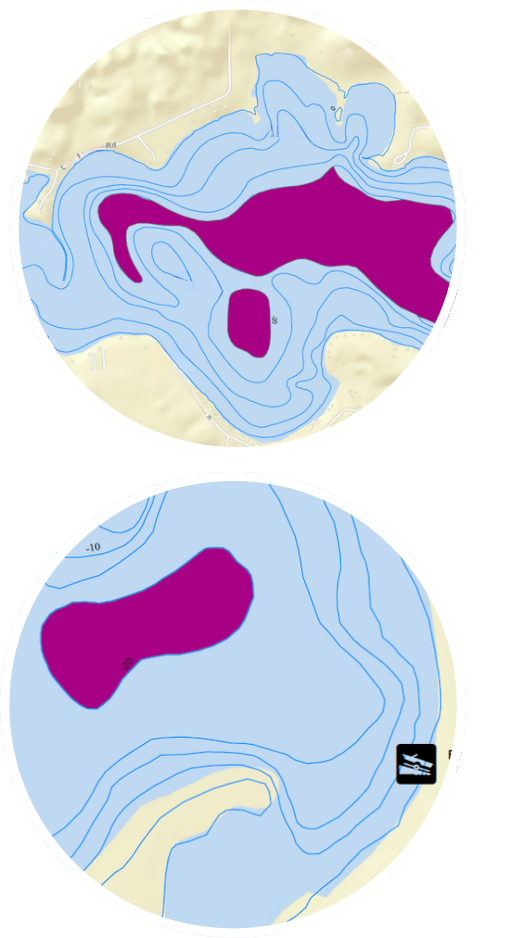
“Own Your Wake” mapping initiative
MLR member Lake Associations can purchase a custom map designed to help boaters make informed decisions on the water. These maps identify areas where enhanced wake activities—such as wake surfing—are recommended to occur at least 500 feet from shore and in water deeper than 20 feet.
Bulk Orders Available Here
Not a member? Join with your lake association
FAQs
How much does a map cost?
Single lakes and chains of lakes with 2 connected lakes cost $150 for a map design (chains will include a map of each lake). Chains of 3 or more connected lakes cost $250 and include maps of each individual lake and the full chain.
Can LGUs request maps for multiple lakes within their jurisdiction?
Yes. Local government units can request custom “Own Your Wake” maps for lakes in their jurisdiction by using this form to make a bulk order request.
What data is used to produce these maps?
Bathymetric data for the Own Your Wake maps is sourced from state databases and is clearly attributed on each map. In cases where public data is unavailable, MLR’s map designers may be able locally source contour information.
Why 500 feet from shore and 20 feet deep?
MLR worked with the University of Minnesota’s St. Anthony Falls Laboratory to launch the Healthy Waters Initiative as an independent study of wake and prop thrust impacts.
Phase I of the study found that boats in surf mode can produce waves 6–12 times more powerful than non-wake boats. The finding suggest operating at least 500 feet from shore reduces wave height and energy comparable to non-wakesurf boats at 200 feet from shore.
Phase II examined underwater impacts, including bow and stern pressure waves, prop wash, and transverse waves. In water less than 20 feet deep, these forces can lakebeds for up to 15 minutes after a boat in surfing mode passes. The finding suggest minimizing repetitive passes and staying in 20 feet or deeper water minimizes these disturbances, protecting lake ecosystems and water quality.
Can I order printed maps?
At this time, Minnesota Lakes and Rivers Advocates does not offer printing services. Maps are provided as print-ready PDF files for you to print and share locally.
When will I receive my map and in what format does it come in?
Production time varies depending on the number of maps requested. Estimated delivery is within 4 weeks of payment processing.
Maps are delivered via email as high-quality (300 dpi), ready-to-print PDFs in tabloid size (11″ × 17″ or 17″ × 11″, depending on orientation), allowing you to print through a vendor of your choice, include in newsletters and outreach materials, and share digitally with your community.
Are these best practices taught in MN Boater Education?
Yes. To promote safe boating practices for both non-wakesurf and wakesurf boats, MLR supported a 2022 law establishing a boater safety and certification program—a formal boating licensed—and helped develop the curriculum that Minnesota boaters now follow.
According to U.S. Coast Guard statistics, 75% of boating fatalities occur on vessels operated by individuals without safety training, compared to just 12% for those with certified training. In 2025, the requirement launched for boaters under 21, and over ten thousand individuals completed the certification course in the first month. The program will gradually expand each year to include all boaters in the state, eventually reaching hundreds of thousands. The course teaches best practices, including operating at least 500 ft from shore and in water at least 20 ft deep when in surfing mode, to ensure safety and minimize ecological impact.
Are there state laws regulating wake surfing based on these recommendations?
No. Minnesota does not currently have laws that enforce 500 feet from shore and 20 feet deep.
At this time, MLR does not recommend state laws restricting wake surfing because the research is still ongoing. Phase III of the Healthy Waters Initiative will examine nearshore impacts and the differences between rain- and wind-driven waves (expected release in 2026). We believe it is important to wait for these results before considering any regulatory changes, ensuring that policies are guided by complete, science-based evidence.
In the meantime, the Own Your Wake maps provide education and guidance for boaters and communities. These maps help establish best practices—such as operating at least 500 feet from shore and in water 20 feet or deeper—as an accepted social norm, so that any future policies can be informed, fair, and effective while protecting lake ecosystems and supporting responsible boating.