By Sami Selter, Associate Executive Director, MN Lakes & Rivers
The Minnesota Department of Natural Resources (DNR) Roundtable is where the state agency reports on progress for key projects and programs and facilitates discussions among leaders in Minnesota’s natural resources fields.
Minnesota Lakes and Rivers (MLR) has represented lake groups at this event for years, and it’s been exciting to see more and more lake associations participating. For over 25 years, the DNR Roundtable was by invitation only—lake associations were not included. In 2021, MLR advocated for broader participation, and the DNR implemented a first-come, first-served open registration.
At this year’s Roundtable, my colleges and I saw influence of adding lake association voices to the discussion, with half of the panels focused on water-related issues and programs.
Lake associations were not only present among the attendees, but the Whitefish Chain of Lakes Association, Gull Chain of Lakes Association, and Bay Lake Improvement Association were invited, along with MLR, as panel presenters. This marked a milestone for lake groups, showing their growing role in shaping conservation and policy discussions in Minnesota.
The opening plenary of the event included a legislative panel discussion with co-chairs Representative Josh Heintzeman and Representative Peter Fisher of the House Environment and Natural Resources Finance and Policy Committee, and Senator Foung Hawj, Chair of the Senate Environment, Climate, and Legacy Committee.
The discussion highlighted how legislators can work together with Minnesotans to advance conservation, natural resource management, and outdoor recreation across a range of topics. A recording of the session is available here.
This was my second year presenting on a panel during the “Candid Conversations” portion, discussing how to balance lake vegetation management. It was also Lily’s second time presenting as MLR’s Lake Steward Coordinator, highlighting the importance of protecting natural shorelines. In both discussions we asked the attendees to participate in sharing ideas on how to improve management of the shore and the public waters of Minnesota.
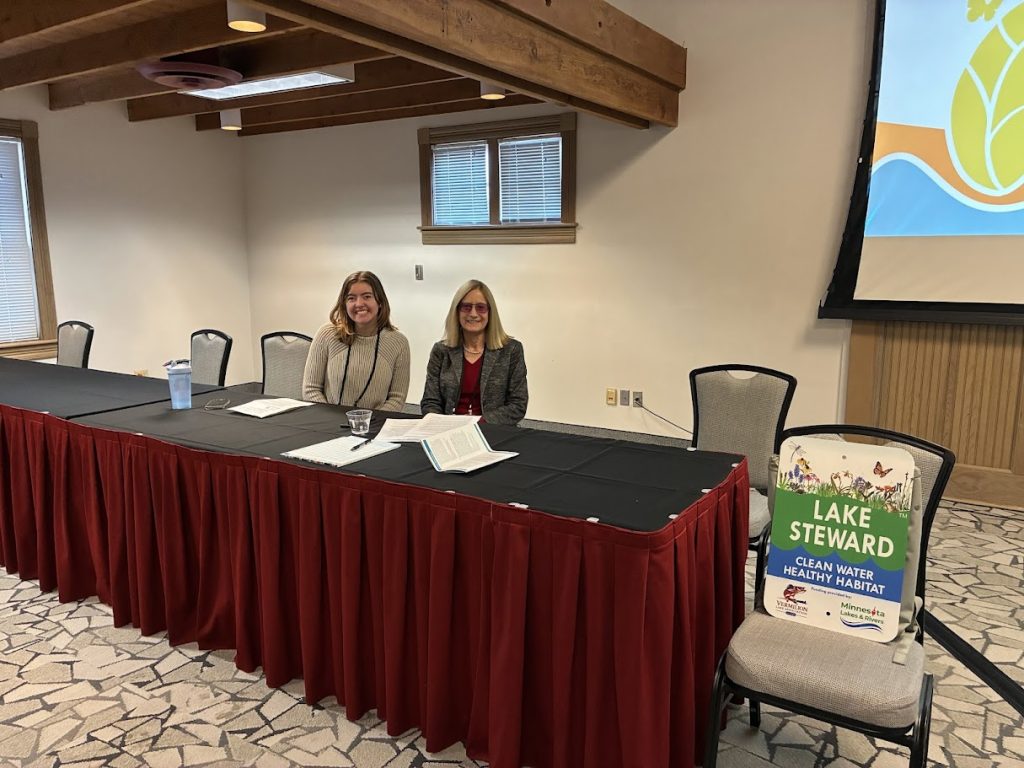
Lily’s Lake Steward–focused conversation, co-hosted with GCOLA’s Dorothy Whitmer, highlighted strong enthusiasm for protecting natural shorelines.
Attendees discussed concrete ideas for messaging the vital importance of shoreline restoration and preservation. Suggestions ranged from influencing realtors to feature native plant buffers in their imagery to partnering with Soil and Water Conservation Districts that can help design and fund restoration projects.
Lily shared how Lake Steward is expanding statewide and highlighted recent updates supported by lake associations, SWCDs, watershed districts, the DNR, Tribal governments, and water-focused nonprofits through the Minnesota Natural Shoreline Partnership. The partnership has developed educational tools such as It’s SHORE Important, the build-your-own shoreline game, along with a collaborative analysis focused on streamlining shoreline alteration variances across agencies and local governments. Ideas generated during the Roundtable will help inform the partnership’s upcoming strategic planning meeting.
My panel focused on balancing native and invasive aquatic vegetation in lake management planning. Attendees discussed the various “stressors” that influence how vegetation is managed, along with the regulations governing these practices in Minnesota.
We emphasized viewing aquatic ecosystems as habitat—not only for fish and wildlife, but also for people—and the essential role healthy vegetation plays in supporting those uses.
Ideas for balancing these stressors included practicing best boating behaviors to avoid disturbing sensitive management areas; improving public education about the ecological benefits of native vegetation; using targeted, science-based approaches to invasive species control; coordinating management efforts across lake associations, local governments, and state agencies; and incorporating long-term monitoring to track changes in vegetation and ecosystem health over time.
The DNR Roundtable continues to demonstrate the value of bringing diverse voices to the table, and this year made clear that lake associations are no longer on the margins of natural resource decision-making in Minnesota.
The thoughtful ideas shared during both panels reflect a growing understanding that protecting shorelines and managing aquatic vegetation require collaboration, shared responsibility, and a long-term perspective. As MLR, lake associations, and agency partners continue to build relationships and align efforts, these conversations are helping shape more effective, inclusive approaches to stewarding Minnesota’s lakes—now and for generations to come.