
How to Protect Your Property from Wildfire
By Jeff Forester, Executive Director of MLR and author of Forest for the Trees, How Humans Shaped the Northwoods
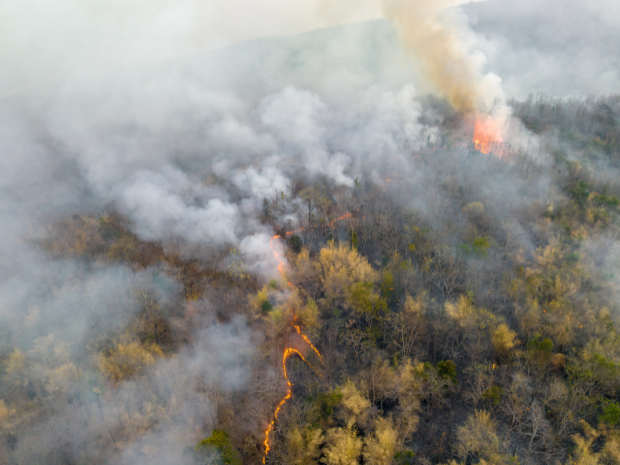
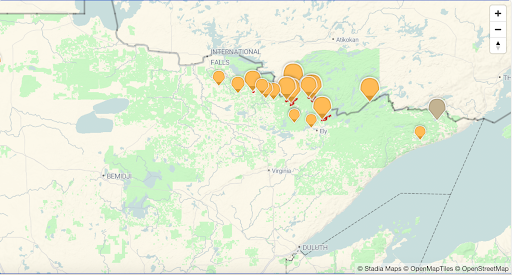
As smoke from wildfires in northern Minnesota fills our skies, my staff and I at Minnesota Lakes & Rivers have been thinking about the communities experiencing these impacts firsthand—communities made up of many of my friends, neighbors, and people who share a deep connection to the lands and waters we all cherish.
Many of us have cabins or homes on wooded lakes, and are therefore in areas where wildfire is a way of life. Our family place is on Pine Island, Lake Vermilion. We were up north when the fires started, and we saw the smoke. Even now, as new fires in the area start and established fires continue to burn, I have some peace of mind due to actions that I have taken to reduce the likelihood of a catastrophic fire on our property.
In 2005, I was honored to have the Minnesota Historical Society Press publish Forest for the Trees, How Humans Shaped the Northwoods. The book chronicles the impacts of human management of northern Minnesota’s forests from Indigenous management practices going back thousands of years, early settlers, pioneer mining, logging operations, creation of the United States Forest Service, designation of a large portion of the area as a federally protected Wilderness Area, and then the big blow down in the Boundary Waters Canoe Area on July 4th, 1999, and the need to set wildfires inside the BWCA to manage fuel loads as a result of the blow down.
Through my research for the book, I learned that the single biggest impact of humans in northern Minnesota, and much of the nation for that matter, was the suppression of forest fires.
Prior to European settlement in northern Minnesota in the 1860s, fire was a regular and essential force across the landscape, moving through forests as frequently as once every three years. In 1909, following devastating logging-related fires, including the Great Hinckley Fire in Minnesota and the Peshtigo Fire in Wisconsin—where thousands of people lost their lives—the United States Forest Service (USFS) began an aggressive fire suppression program.
USFS built fire towers across the nation and connected these towers with telegraph and then phone lines. They trained a small army of firefighters. Following World War II, they began watching the national forests with airplanes and deployed smoke jumpers to parachute into wildfires and put them out. At the same time, the National Interagency Wildfire Center set the goal of snuffing out every fire by 10:00 am the day following its report.
For many years, this approach was successful. The number of wildfires and the acres burned steadily declined as fire suppression became a central part of forest management. However, over time, other factors began to change the landscape. Temperatures increased, more people moved into previously remote, wooded areas, and forests accumulated heavier fuel loads that had historically been reduced through regular fire cycles. Today there are fewer fires, but the acres burned and the intensity of the fires we do have, has increased dramatically, as have deaths and loss of structures.
Our fire response is good, and most fires are discovered and extinguished quickly unless the conditions are hot, windy and very dry. Once a fire escapes early attack, there is very little that can be done to extinguish it until winds die back, temperatures fall, and/or it rains or snows. In essence, our aggressive fire policy has been selected for fires in the worst possible conditions.
There is a need to increase budgets for fuel reduction treatments that remove smaller, more drought intolerant forest features like grasses, shrubs and lower canopy trees, also known as prescribed burns.
Better the fires we chose than the ones we do not.
For those with cabins or homes surrounded by forest, particularly those with dense stands of balsam fir, the hazard is very real. Forest fires in northern Minnesota are a weather event, although with a longer frequency than rain or snow, and it is not a matter of “IF” a forest fire will traverse your property, but “when.”
Forest owners must recognize this fact, and decide to take action to determine the type of fire they want on their land – an out of control crown fire, or a rejuvenating ground fire. The thick undergrowth of balsam fir and spruce that was once removed by periodic low intensity fires now crowds out young pine seedlings AND creates a fire hazard that will ultimately destroy the remaining stands of old growth that survived logging.
The Difference Preparation Can Make
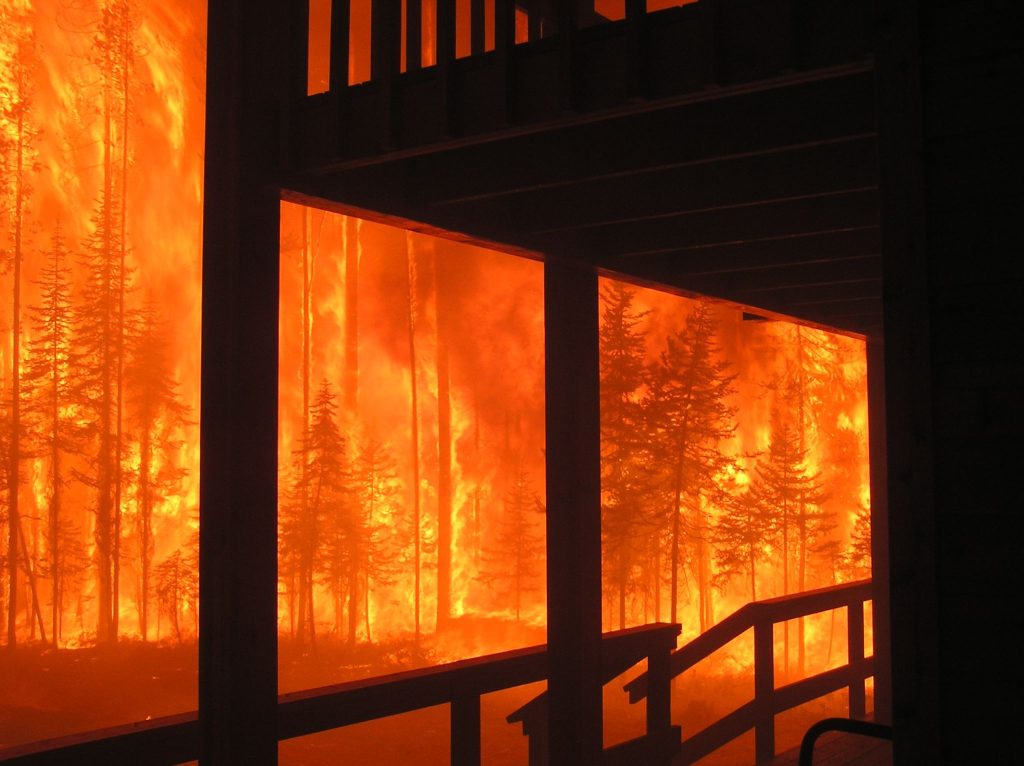
You would think the home in this photo above would be lost to fire but….
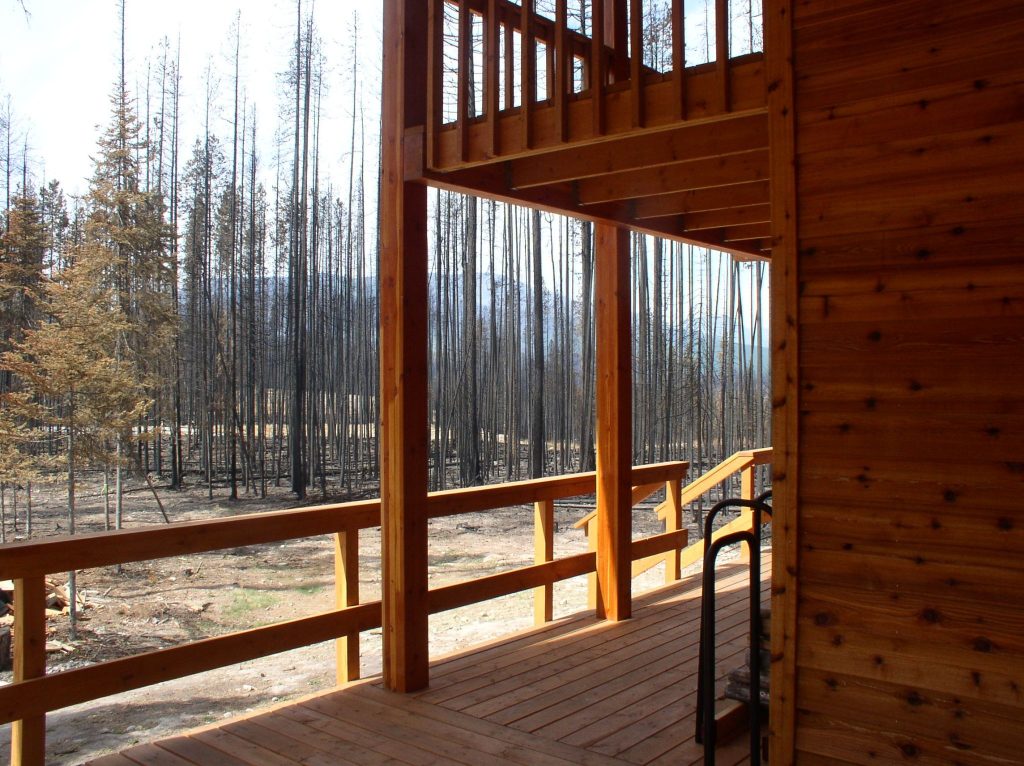
It survived the fire.
To protect your home or cabin, here are a few simple things you can do:
Manage Your Forest
- “Whack and stack” the balsam fir and spruce on your property. Fell the smaller lower canopy trees, limb them, and cut the trunk into 4-6 foot sections. Stack the debris into a tight pile to be burned in winter, or allowed to decompose naturally. Start at your buildings and work your way out from there.
The goal is to prevent fire from “laddering” up these lower, highly flammable trees into the crowns of the larger, more mature trees.
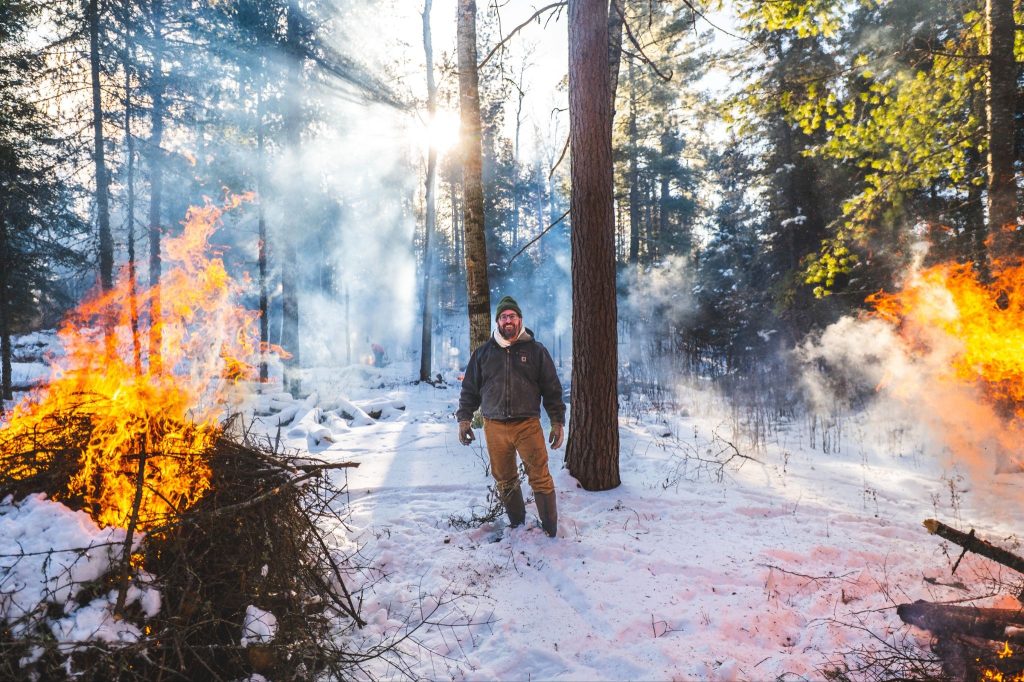
- Keep 10-foot minimum space between evergreen tree crowns, and the tree crowns and home. This prevents fire from jumping tree to tree and tree to home.
- Trim grasses and keep shrubs, trees and other vegetation at least 30 feet away from your structures.
Structure Management
- Install a gas powered lake system connected to a sprinkler mounted on the highest point of your roof. When a fire approaches, start the pump and evacuate. There is also a registry where you can let fire fighters know that you have this system. They will start the pump for you if you are not in the area.
- Make sure all openings into your home, like roof vents, are screened to prevent embers from entering your home.
- Do not store fire wood or any other flammable material under your deck or porch.
- Make sure that you have no flammable decorations (raffia door mat for instance) or tools (broom) outside your home.
- Replace wooden roof shingles with non-flammable alternatives like steel or class A shingles.
- Rake leafs, dried grass and other tinder at least 30 feet out from the side of your structure.
For more information, here is a presentation that I made on the history of fire in our forests and the science behind the fire impacts on our communities for the Inver Hills Community College’s Student/Faculty Conference some years ago. Sadly, it is still relevant.
All of us at Minnesota Lakes & Rivers are thinking of our members, communities, and friends impacted by these recent fires. We are wishing you safety and strength as you navigate these challenging conditions.