Inspiring Shoreline Stewardship and Community Action
The idea behind Minnesota Lakes & River’s Lake Steward Program is simple but powerful. Your lake association sends out a simple ten question quiz that property owners can take to “score their shore.”
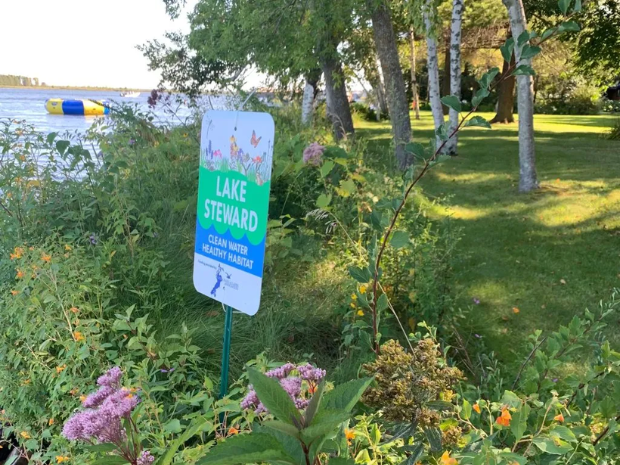
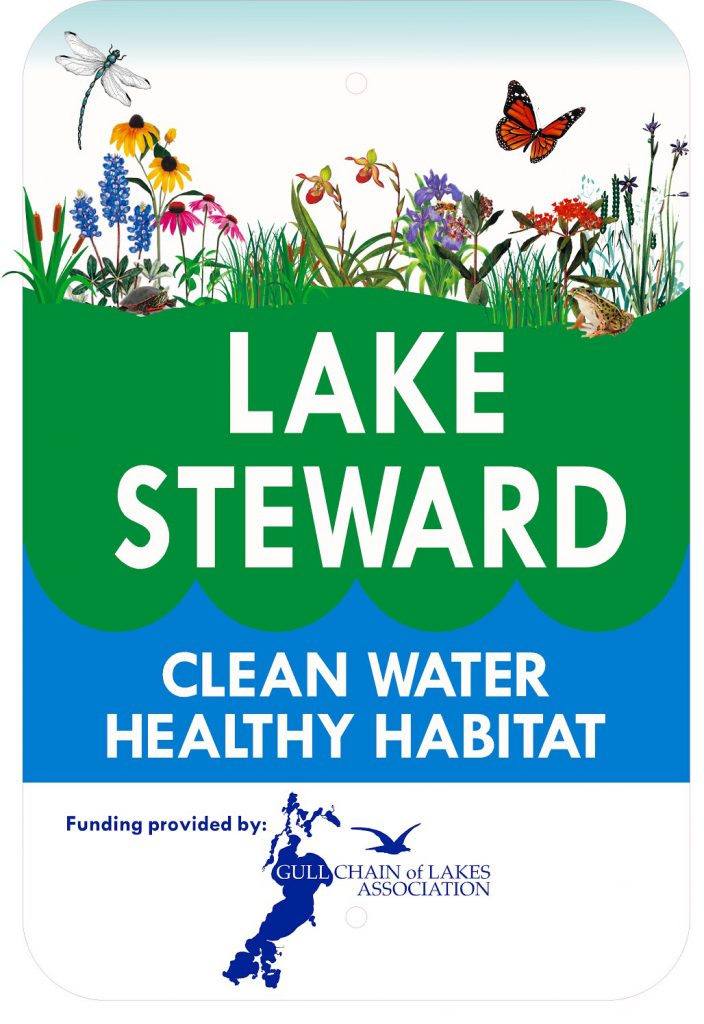
The results are sent to a volunteer “evaluator” who then visits with the property to evaluate using a survey tool. If the candidate meets standards for capturing and filtering 90% of runoff, they are are awarded a beautiful sign displayed at the end of the dock, visible to other lakeshore owners, designating them as a Lake Steward. If the shoreline does not meet the standards, the Lake Steward evaluator can talk about steps they can take to meet the criteria.
The Gull Chain of Lakes Association (GCOLA Lake Steward) developed this neighbor-to-neighbor model for the program to show that their members cared deeply about their lake and water quality; they were simply waiting for an opportunity to act. Of 614 GCOLA members contacted to take the quiz, hundreds have done so. In only 3 seasons, 63 Lake Stewards have been awarded, and there are currently more than 90 owners working to become Lake Stewards.
For the statewide program, Minnesota Lakes & Rivers has a designated Lake Steward Coordinator who provides training, tools, and contacts for volunteers so they can provide information to the property owners about local resources and companies that can help them do restoration work and identify matching grant opportunities.
Getting started with on your lake is easy. Here it is broken down into 6 core steps:
Step 1: Assemble a Lake Steward volunteer team
A successful program is led by 1–3 volunteers, depending on lake size, who help respond to surveys, visit properties, and share resources with landowners. Once your team is in place, contact the MLR Lake Steward Coordinator to add your lake to the quiz and begin training. Volunteers only need a basic understanding of shoreline stewardship to mentor property owners and connect them with restoration guides, professional services, and grant opportunities. Each spring, MLR also hosts a webinar to prepare volunteers for the upcoming season.
Step 2: Distribute the “Are You a Lake Steward?” quiz to Your Members
The 10 question survey takes 5-10 minutes to complete and helps shoreland owners compare their landscaping and management to the Minnesota Department of Natural Resource’s best practices for water quality and enjoyment. The quiz serves as a starting point to get lakeshore owners interested as they are informed about what practices are beneficial for the lake. GCOLA found that emailing the survey link directly to members generated the strongest participation. Additional outreach methods also proved effective, including posting the survey on the GCOLA website, providing paper copies at meetings, including information in membership mailings, and encouraging members to contact neighbors directly.
Step 3: Contact Responders and Ask to Visit the Property
Following the quiz, volunteers send a personal thank-you email, respond to any comments, and request a site visit regardless of the property’s score. High scorers help model best practices, while lower scorers often have the greatest opportunity to improve water quality through changes to their property. For GCOLA, volunteers selected a date and requested permission to visit within a two-hour window, noting that the property owner did not need to be present. Boilerplate language for letters and emails can be found on the MLR Lake Steward webpage: www.MNLakesAndRivers.org/lake-steward
Step 4: Conduct Site Visits
On site, the Lake Steward volunteers from your lake association will check whether the lakeshore owner meets criteria by making observations and taking photos and measurements. MLR provides a survey tool to guide this process. Generally, site visits take around 30 minutes to complete, if the landowner is not present, site visits on average took 10-15 minutes.
Some of the more rewarding visits for GCOLA have been when owners are present, but contact can also be made by phone or email afterward. The site visit can provide an opportunity to listen to property owners’ concerns and goals, and in some circumstances to award the sign and take photos of the new Lake Steward with their award sign. If changes are needed, the team can offer advice/resources about obtaining grant funds to defray costs.
After the site visit, an email is sent thanking the participant, describing the findings and either offering congratulations or advising on what changes could lead to the award. Even if changes have been discussed in person with the owner, it is important to write them down in an email for everyone’s reference.
Step 5: Order and Award Lake Steward Signs
GCOLA found that participants fell into three groups: Already a steward, Want to Be a Steward, or just Curious. All three groups are very important to the program. The curious have lots of questions and the team was prepared to answer.
The Lake Steward signs are 12×18 inches, aluminum, UV coated. They are $45 each. They are Minnesota made and should last a long time. There is space at the bottom of the sign for the lake association logo.
As part of the launch of the program, MLR currently has a grant until 2024 to pay 50% of the costs for the first 100 signs with the participating lake association paying the other half. After conducting your site visits, email the Lake Steward Coordinator with a high resolution copy of your Lake Association logo and the number of signs that you need. MLR will invoice your lake association for half the cost.
Step 6: Promote the Native and Natural Norm
Once the program is up and running, the awards will promote additional participation. There are plenty of ways to use the signs to promote the program and encourage lakeside participation. A few ideas include:
- Encourage people to put the signs at the end of their docks where they are most visible to boaters and neighbors enjoying the lake.
- Publish a Google map of properties that have received the awards. That helps residents to find and view properties from the water, but the map also reinforces how many residents are on board with water quality efforts and is encouraging to all.
- Publish photos and family stories of Lake Stewards in lake association publications and social media, thanking them for protecting the lake.
Watch as a new standard is set! Neighbors come on board for better water quality, and a cultural change for clean water, healthy habitat starts to happen.
Learn more and get an in-depth dive into GCOLA’s Lake Steward program by watching this webinar.